Table of contents
Travel is in the middle of a quiet revolution, and it is not driven by aircraft orders or hotel openings, but by mindset. After years of “checklist tourism”, more travelers now plan around what they want to feel, learn, and remember, and the data backs the shift: experiential spending keeps outpacing pure goods purchases, and cities are actively managing crowd pressure with timed entry, visitor caps, and neighborhood dispersion. In that context, becoming an active explorer is less a personality trait than a set of choices, and it can transform the same destination into a radically different trip.
Why “seeing it all” is fading
Ask anyone who has tried to “do” a capital in two days, and the pattern is familiar: early queues, rushed photos, too many stops, and an oddly flat memory of it all. The classic passive model, bus hop-on hop-off, landmark sprint, souvenir pause, was built for an era when access was scarce and information even scarcer. Today, access is everywhere, and information is endless, so the value of travel has moved from “I went” to “I understood”. That is not just a cultural intuition, it is visible in how money flows: in the United States, the Bureau of Economic Analysis has tracked for years that the share of consumer spending going to services, including travel, dining, and recreation, has tended to outweigh goods, a long-run tilt that accelerated after pandemic disruptions. Travelers, especially those paying premium prices, increasingly expect depth: a workshop, a conversation, a route with a story, and not simply a backdrop.
The pressure of overtourism has also turned passive routines into liabilities. Venice has introduced an access fee on peak days, Amsterdam has curbed certain tourist-oriented offerings and pushed visitors to look beyond the historic core, Barcelona has debated and implemented limits on short-term rentals in parts of the city, and major museums from Paris to Rome have expanded timed-ticketing norms that make spontaneous “drop-ins” harder than they used to be. The message is implicit but clear: the friction is rising for those who arrive without a plan, while opportunities multiply for those who design their days differently. When a city nudges visitors away from a single corridor of “must-sees”, it effectively rewards exploration, and it makes the passive tourist model, built on predictable funnels, less efficient and less pleasant.
Planning less, preparing smarter
More freedom, not more spreadsheets: that is the paradox of active travel. Active explorers are not necessarily obsessed planners, they are selective planners, and they arrive with a few high-quality anchors rather than a rigid timetable. The point is to reduce decision fatigue on the ground, so you can spend attention on the place itself. Research in behavioral science has long shown that too many options can degrade satisfaction, and travel magnifies that effect because every choice costs time, energy, and money. A smarter approach starts before departure: pick one or two themes, architecture, street food, social history, green spaces, craft beer, and then build around them, because a theme converts a city from a map into a narrative.
It also means preparing in ways that do not look like “planning”. Learn the transit basics, not every line, but the logic of the network, the payment method, and the late-night constraints; check what requires a reservation, what sells out, and what is better early in the day. If you are visiting a city with heavy footfall, for example, popular museum slots and certain guided walks can disappear quickly in high season, so the active mindset treats reservations as a tool for spontaneity, not its enemy. This is where curated local options become practical: a well-structured day tour or a guided walk can compress context into a few hours, and then open up the rest of your trip with confidence. For travelers heading to northern England, resources like https://www.york-trip.com can function as a launchpad, helping visitors identify what is worth booking, what is better explored on foot, and how to connect iconic spots with lesser-known corners without burning a full day on logistics.
On the ground, curiosity beats speed
Want a simple test? Count how often you stop for a photo, then ask how often you stop for a question. Active exploration is built on the second impulse, and it changes your pace without turning travel into homework. Instead of racing through five landmarks, you linger in one district and let it unfold, the way residents experience it: a market, a small museum, a park bench, a pub conversation, a bookstore where the cashier recommends a local author. That sounds romantic, but it is also measurable in outcomes: slower itineraries tend to reduce stress and increase recall, and travelers report higher satisfaction when their days include a mix of “high points” and unstructured time. The goal is not laziness, it is bandwidth, because a city can only be “seen” at the speed of attention.
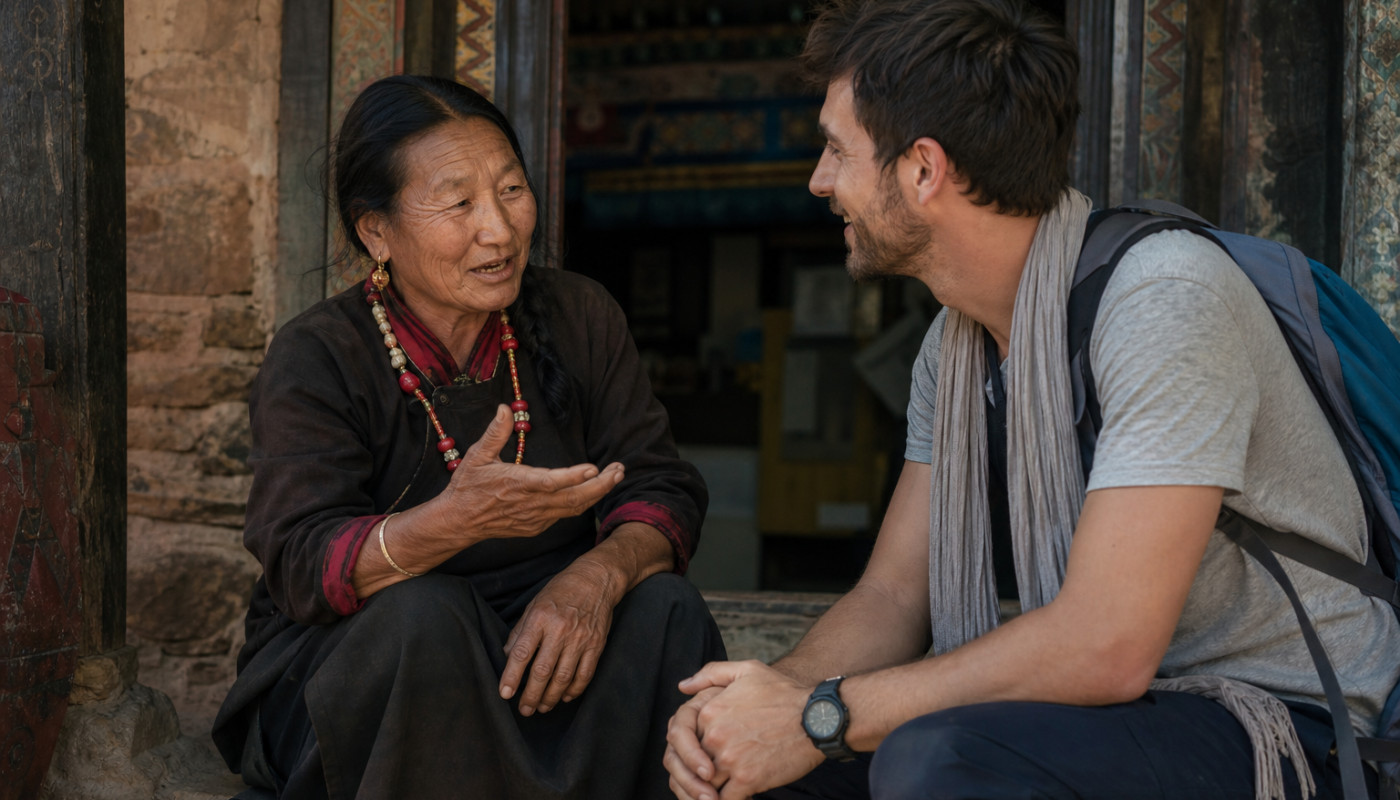
Curiosity also makes you more resilient to the realities of modern travel, delays, queues, weather shifts, and sudden closures. If your identity as a traveler depends on ticking off a single view, one disruption can sour the day; if your identity is “I explore”, you pivot. Practically, that means building flexible alternatives: if the cathedral line is two hours, you choose a neighborhood walk and return at dusk; if rain hits, you swap in a gallery, a food hall, a historic pub route, or a local talk. It also means using guides and locals as accelerators, not as crutches. A short guided segment can give you the story scaffolding, dates, characters, and controversies, and then your independent wandering becomes richer because you know what you are looking at. Exploration is not about rejecting structure, it is about using structure to unlock more meaningful wandering.
Ethics, budget, and the new status symbol
The new travel status symbol is not the selfie, it is the story you can tell without showing a screen. That shift has ethical and financial implications, and travelers feel them. Cities under strain are increasingly vocal about what they need: respect for residential space, responsible waste behavior, and spending that benefits local economies rather than only global chains. Choosing an independent café over a generic brand, booking a small-group tour run by locals, or traveling in shoulder season is not just virtue signaling, it is a way to keep destinations livable, and livability is what makes them worth visiting. The active explorer mindset aligns naturally with these choices because it values texture: local habits, local businesses, local history, and you cannot access those through the same standardized funnel every time.
Budgeting changes, too, and often for the better. Passive tourism tends to leak money through convenience: expensive taxis instead of transit, overpriced “nearby” meals, last-minute tickets bought at a premium, and paid shortcuts that do not actually save much time. Active exploration shifts spending toward fewer, higher-value moments: one paid experience you will remember, a well-chosen guide, a ticketed site at the right hour, and then long stretches of low-cost discovery, parks, free viewpoints, street markets, walking routes. For many travelers, this is how a trip becomes both richer and more controllable financially. It is also where modern tools matter: transparent pricing, reservation systems, and curated city guides reduce the hidden costs of being unprepared. In an era of crowded hotspots and rising prices, the most “luxurious” thing you can buy is often not an upgrade, but clarity.
Turning intention into an itinerary
Choose one or two bookable highlights, set a realistic daily radius, and reserve anything that reliably sells out. Build in unplanned hours for wandering, and keep a small list of weather-proof alternatives. If you need help structuring a day, compare options and book early; discounts and local passes can lower the bill when timed well.
Similar