Table of contents
Rafting at dawn, a silent hike above the clouds, then a long dinner where the only soundtrack is the clink of plates: more travelers are building their holidays around activities rather than checklists of sights, and tourism boards are following closely. In Europe alone, active and nature-based trips have grown steadily in recent years, pushed by low-cost flights, remote work, and a post-pandemic appetite for “doing” instead of just “seeing”. The result is a new kind of journey, where adrenaline and calm are not opposites but chapters of the same story.
Thrills sell, but they also anchor memories
What do people recall first, months after a trip: the museum label, or the moment the river pulled hard under the raft? Experience design researchers have long noted that intense peaks, good or bad, disproportionately shape what we remember, a pattern popularized as the “peak-end rule”. Tourism has embraced it, sometimes clumsily, yet the underlying logic remains powerful: a controlled dose of risk, speed, height, or exertion can turn an ordinary week away into a personal milestone, and that memory becomes the trip’s emotional headline.
The data backs the shift. The Adventure Travel Trade Association has repeatedly reported long-term growth in adventure travel demand since the 2010s, with travelers citing nature, physical activity, and “once-in-a-lifetime” moments as top motivations, while European outdoor participation has also climbed as hiking, cycling, and water sports become mainstream leisure. Importantly, “adventure” no longer means extreme; it now covers guided canyoning for beginners, e-bike itineraries that flatten hills, and short, bookable bursts of action that fit into a broader cultural or culinary schedule. For destinations, these activities are not merely add-ons, they extend the season beyond beach months, they spread visitors inland, and they create jobs that cannot be outsourced.
There is, however, a fine line between thrill and gimmick. Travelers are increasingly sensitive to safety standards, group sizes, and environmental impact, and they compare notes instantly through reviews and short-form video. Operators that invest in certified guides, transparent risk briefings, and realistic marketing tend to outperform those selling bravado. The paradox is that the best adrenaline experiences are often the most professional and the least theatrical, because trust is what lets people say yes to the jump, the rapid, or the ridge. When that trust holds, the rush does more than spike the heart rate; it bonds groups, it breaks routines, and it gives a trip a story worth retelling.
Serenity is no longer passive tourism
Silence has become a product, and not just for luxury travelers. After years of crowded cities and algorithm-driven attention, many visitors now seek calm as actively as they once chased nightlife, and destinations are learning to package serenity without turning it into spectacle. A slow morning in a thermal bath, a coastal walk with no notifications, a village guesthouse where meals follow the garden’s rhythm: these are experiences, too, but they require different skills from both hosts and guests. You do not “do nothing” by accident; you plan for it, you protect it, and you notice it.
Wellness travel illustrates the change. Industry analyses such as the Global Wellness Institute’s reports have for years tracked strong growth in wellness tourism and spending, with demand expanding from spas into broader “wellbeing” itineraries that mix light activity, nature exposure, and local food. Even when travelers do not label a trip as wellness, they increasingly choose accommodations with quiet zones, prioritize landscapes over landmarks, and look for low-noise mobility, from kayaking to cycling. This is serenity as a deliberate practice, where the activity is the attention itself: breathing, walking, listening, eating slowly, and sleeping deeply.
For destinations, serenity has practical consequences. It favors smaller groups, it rewards conservation, and it pushes infrastructure toward footpaths, signage, and public transport rather than sheer volume. It also changes what visitors consider “value”. A packed itinerary may feel efficient on paper, yet many people come home more tired than when they left, and the backlash is visible in the popularity of “slow travel” and longer stays in fewer places. When calm is designed well, it becomes memorable in the same way adrenaline is, not through intensity but through contrast: the moment you realize your shoulders have dropped, your phone has stayed in your pocket, and the day has enough space to be fully yours.
One itinerary, two moods, better balance
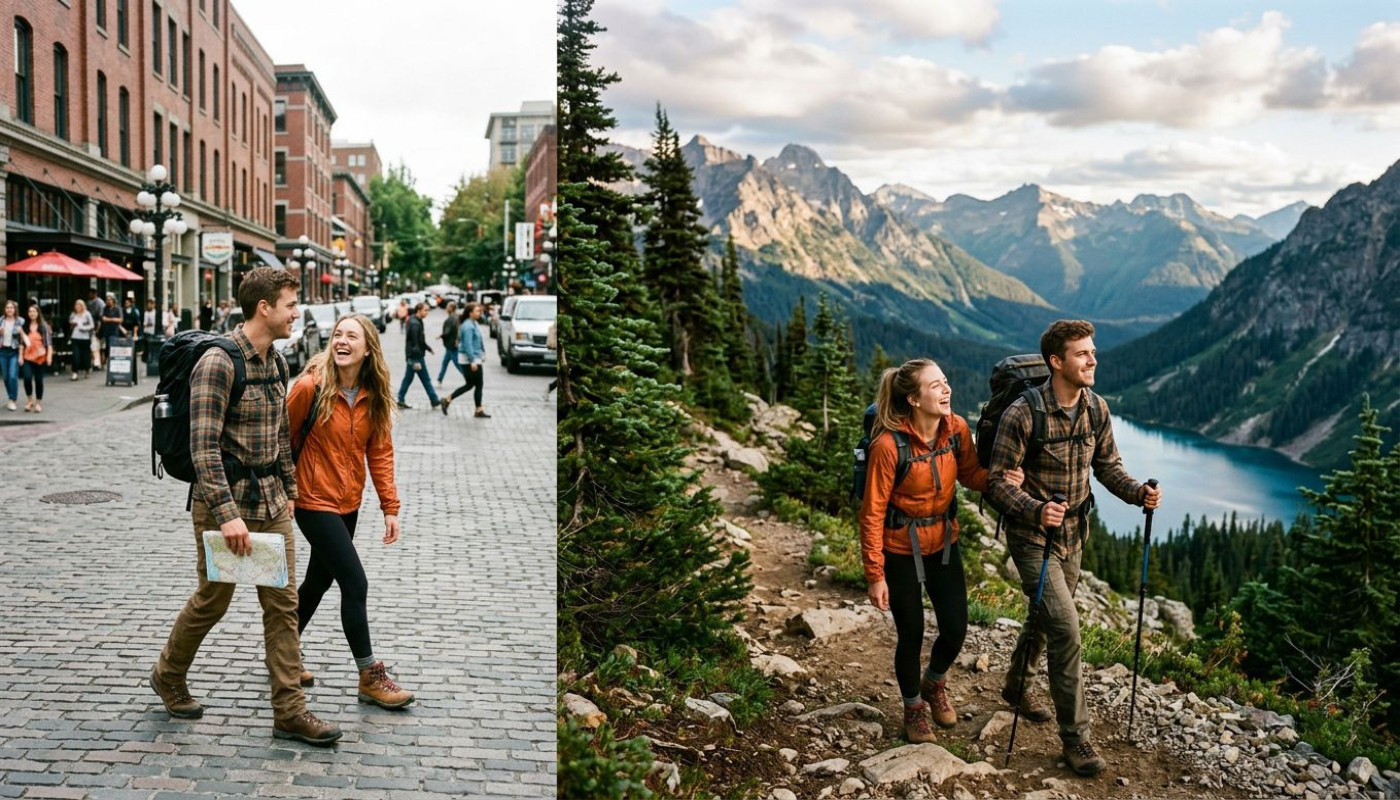
Why choose between pulse-raising and restorative when the best trips choreograph both? The most satisfying journeys increasingly resemble a playlist rather than a lecture, with tempo changes that keep the listener engaged. Start with a demanding hike, follow with an easy afternoon by the water, add a local meal that anchors the day in place, then leave room for an unplanned detour. This rhythm is not accidental; it reflects how people actually recover and how they build meaning, by alternating effort and ease until a destination feels lived in rather than consumed.
Destinations that offer variety within short distances have an edge, because travelers can pivot with weather, fatigue, or mood. Mountain-to-sea geography, river valleys near historic towns, or national parks within reach of family-run restaurants create natural “two-speed” itineraries, and they support different budgets at once. A couple might spend on a guided canyon day, then save by taking public transport to a free viewpoint, while families can mix child-friendly rafting with calm beach hours. In practice, blending moods also helps sustainability, because it spreads demand across activities, times of day, and types of venues, reducing the pressure that comes from everyone chasing the same sunset spot at the same moment.
Planning tools have evolved to match this approach. Travelers build modular schedules, booking a few anchor experiences early, then leaving gaps for rest or discovery, and operators respond with half-day formats, flexible cancellation, and clearer difficulty grading. For those considering the Balkans, for example, a single week can combine highland trails, river sports, and quieter coastal or village days without long transfers, and curated local operators can help connect these pieces into a coherent story. Practical resources such as www.albania-spirit.com are often used by travelers to map activities alongside downtime, compare regions, and understand what is realistically doable in one trip, rather than chasing an exhausting highlight reel.
How to choose activities that feel authentic
Authenticity is a word travelers use constantly, yet it becomes real only through specifics: who leads the activity, where the money goes, and what kind of contact it creates with a place. A jeep tour on the same dust road as every other jeep may deliver photos, but it rarely delivers connection, while a guided walk that explains land use, local history, and seasonal work can change how a landscape reads forever. The difference is not always price; it is intention, storytelling, and respect.
Start with the basics that signal quality. Clear safety information, realistic time estimates, and transparent inclusions are not bureaucratic details, they are indicators that an operator is serious, and they protect the day from unpleasant surprises. Then look for scale: smaller groups tend to mean better access, less noise, and more flexibility, especially for wildlife, rafting, or cultural visits in villages. Finally, ask what the activity gives back, directly or indirectly. Does it use local guides, source food locally, and follow trail or river protocols that reduce impact? Responsible travel is often framed as sacrifice, yet many of its practices simply make for a better experience: fewer crowds, more learning, and a stronger sense of place.
It also helps to match the activity to the season, not just the calendar week you happen to have off. Shoulder months can offer cooler hiking temperatures, higher rivers for rafting, and quieter towns, while high summer may be better for early-morning exertion and slower afternoons. Budget matters, too, and it is wiser to spend strategically than to spend constantly. One standout guided day can elevate an entire trip, while the rest can be built from low-cost pleasures: swims, markets, public viewpoints, and long meals. In the end, unforgettable journeys are rarely made by stacking attractions; they are made by sequencing experiences so that excitement sharpens attention, serenity restores it, and the destination leaves a trace that lasts beyond the return flight.
What to book, and what to budget
Reserve a few high-demand activities early, especially guides in peak season, then keep open time for rest and weather shifts. Set a clear daily spend, and prioritize one “signature” experience over many mediocre ones; transport and meals often cost less when planned locally. Check eligibility for regional discounts or nature-park passes, and confirm cancellation terms before paying.
Similar